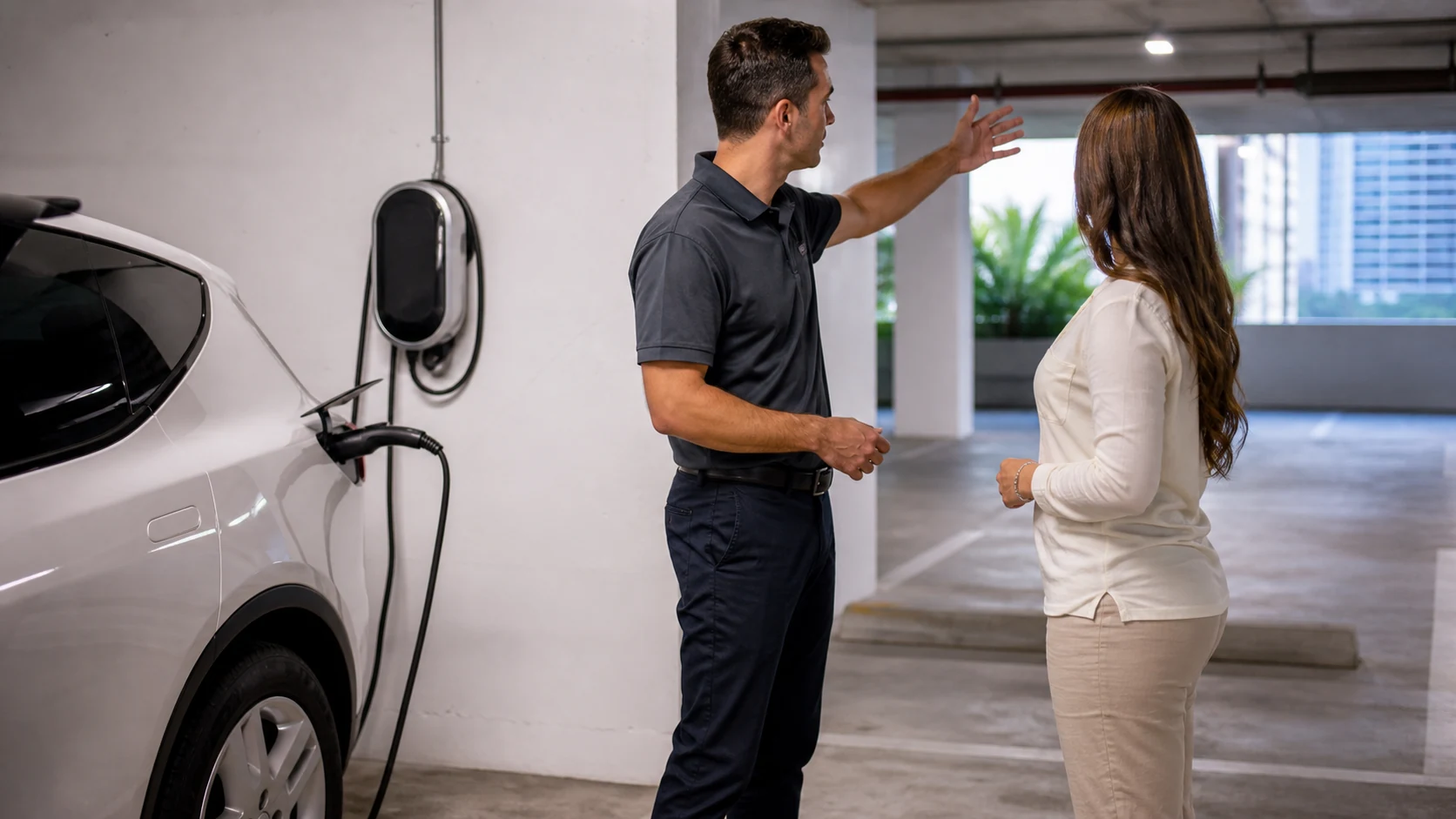
Home EV Charger Options for Miami Residents
Home EV charger options differ by connector, electrical connection, management features and suitability for the proposed location. EV Charger Installation Miami helps Miami homeowners compare equipment with their vehicle, electrical-panel capacity and parking area before installation.
J1772 and SAE J3400/NACS describe important connector choices, while hardwired and plug-connected equipment require different electrical arrangements. To discuss home charging options, Call Now.
Not sure which home charger option fits your property?
Tell us about your vehicle, parking area and preferred charging setup.
Connector and Connection Choices for Miami Home Charging
The vehicle model year and charge port help narrow the connector decision. Adapters may support some combinations, but they should be verified for the exact vehicle and equipment.
A hardwired charger connects directly to a dedicated charging circuit. Plug-connected equipment uses a suitable 240-volt receptacle when the product instructions and electrical plan support that method. To compare connector and connection options for your Miami home, Call Now.
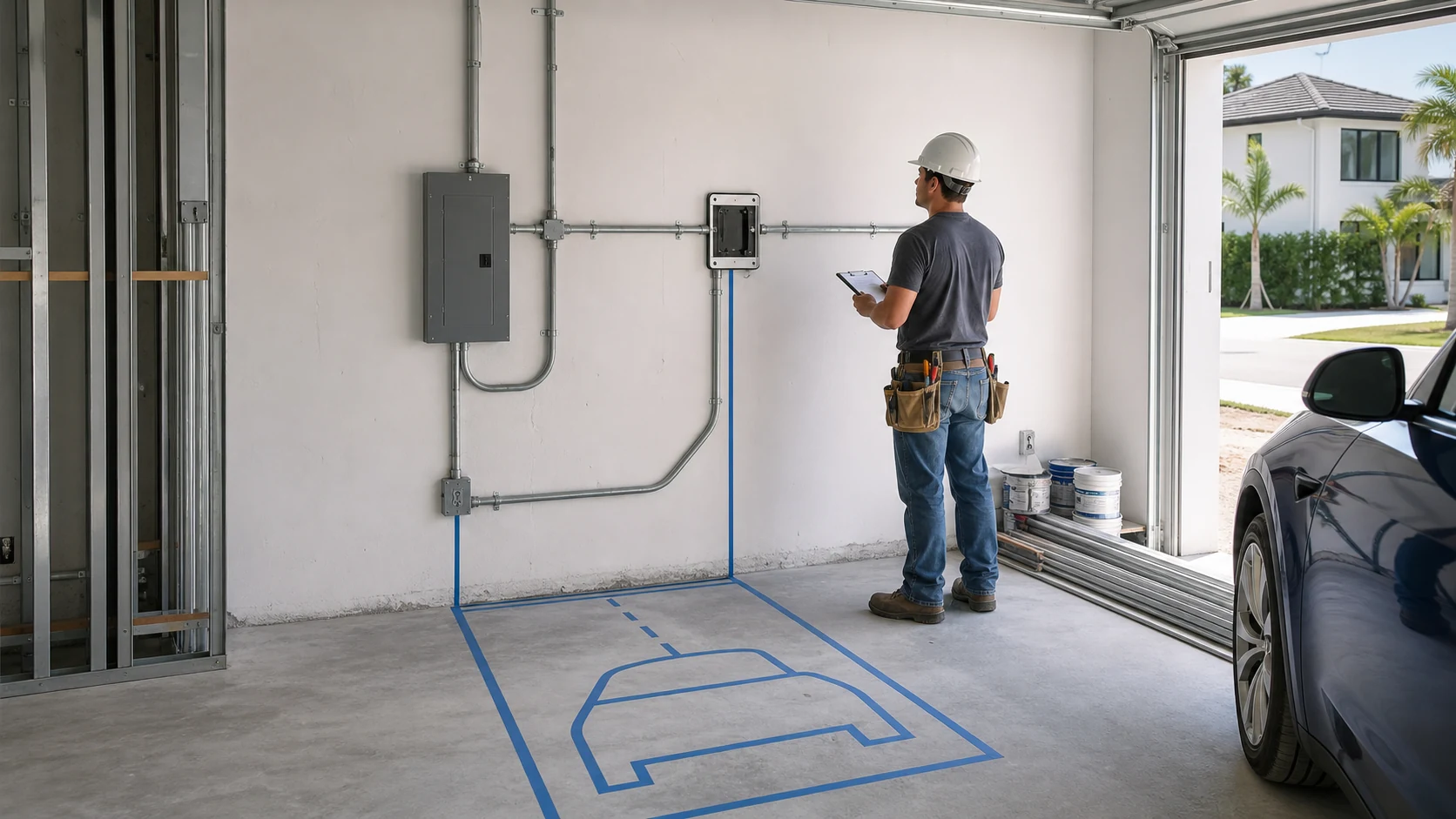
J1772 and J3400/NACS Charging
Connector guidance compares common home charging connections with the vehicle model year and selected equipment. EV Charger Installation Miami can help homeowners consider the charging connection before purchasing equipment or relying on an adapter for regular home use.
Compare Connector Options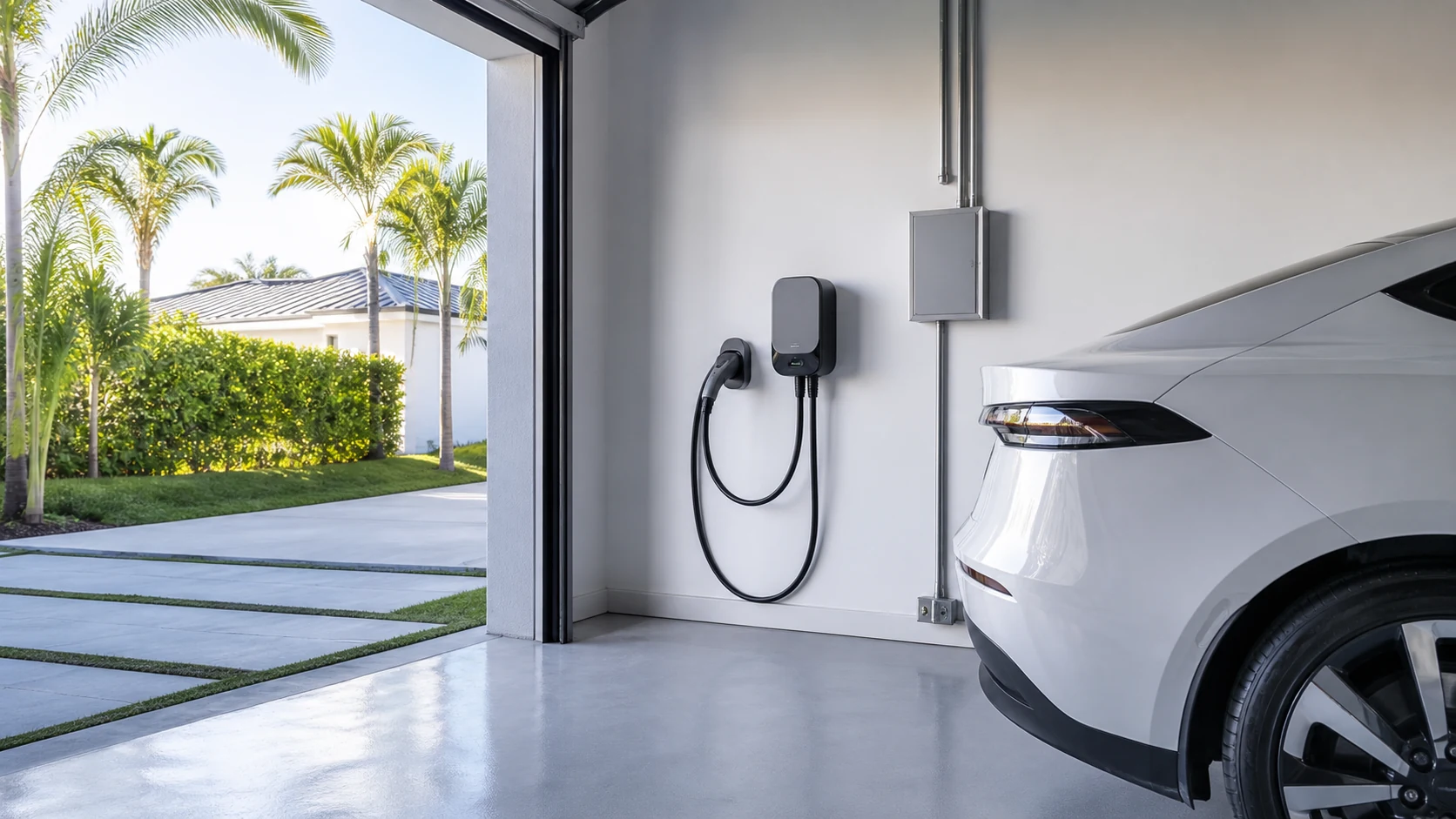
Hardwired EV Charger Installation
A hardwired EV charger connects directly to a dedicated charging circuit. This arrangement may suit a planned charger location where a permanent home charging setup is preferred.
Request Hardwired Installation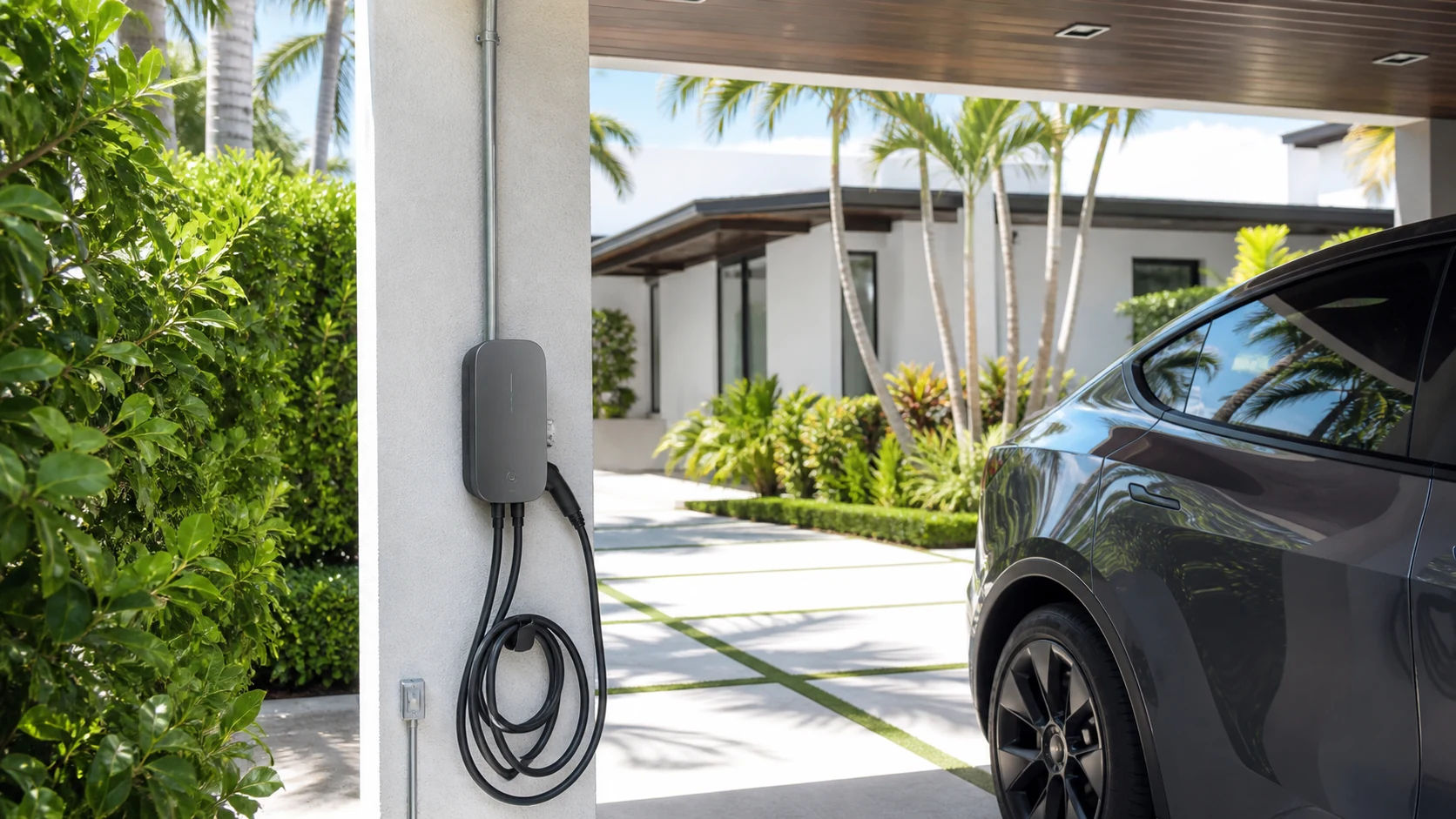
240-Volt Charging Receptacles
Plug-connected charging equipment uses a suitable 240-volt receptacle when the charger instructions and electrical plan support that approach. Request installation planning before selecting equipment for the proposed location.
Request Receptacle Installation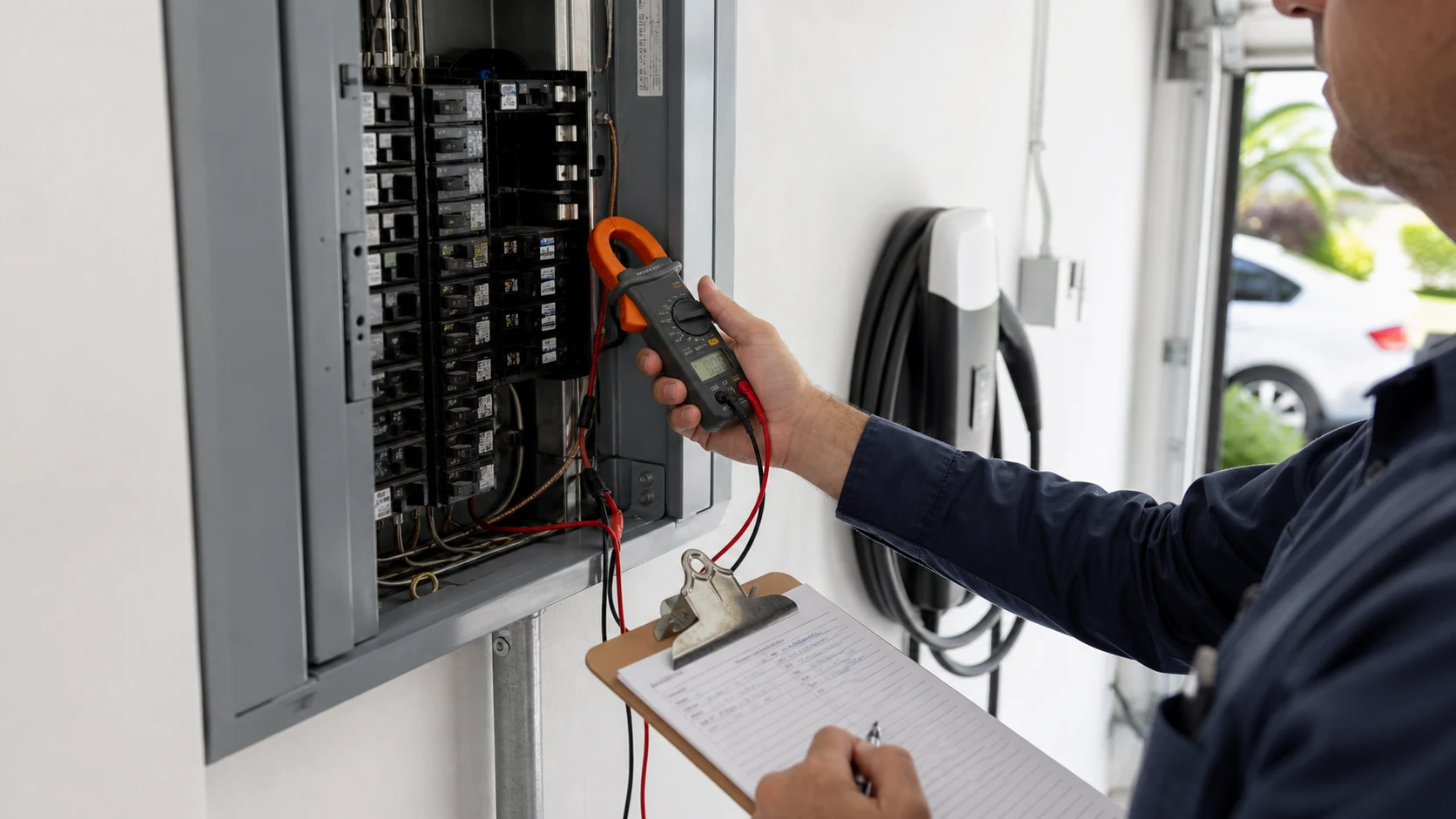
EV Charger Load Management
Compatible load-management equipment can adjust charging demand around available home capacity when the selected charger and electrical plan support those controls. Request an evaluation when a preferred charger load may not fit comfortably beside other significant household electrical use.
Evaluate Load Management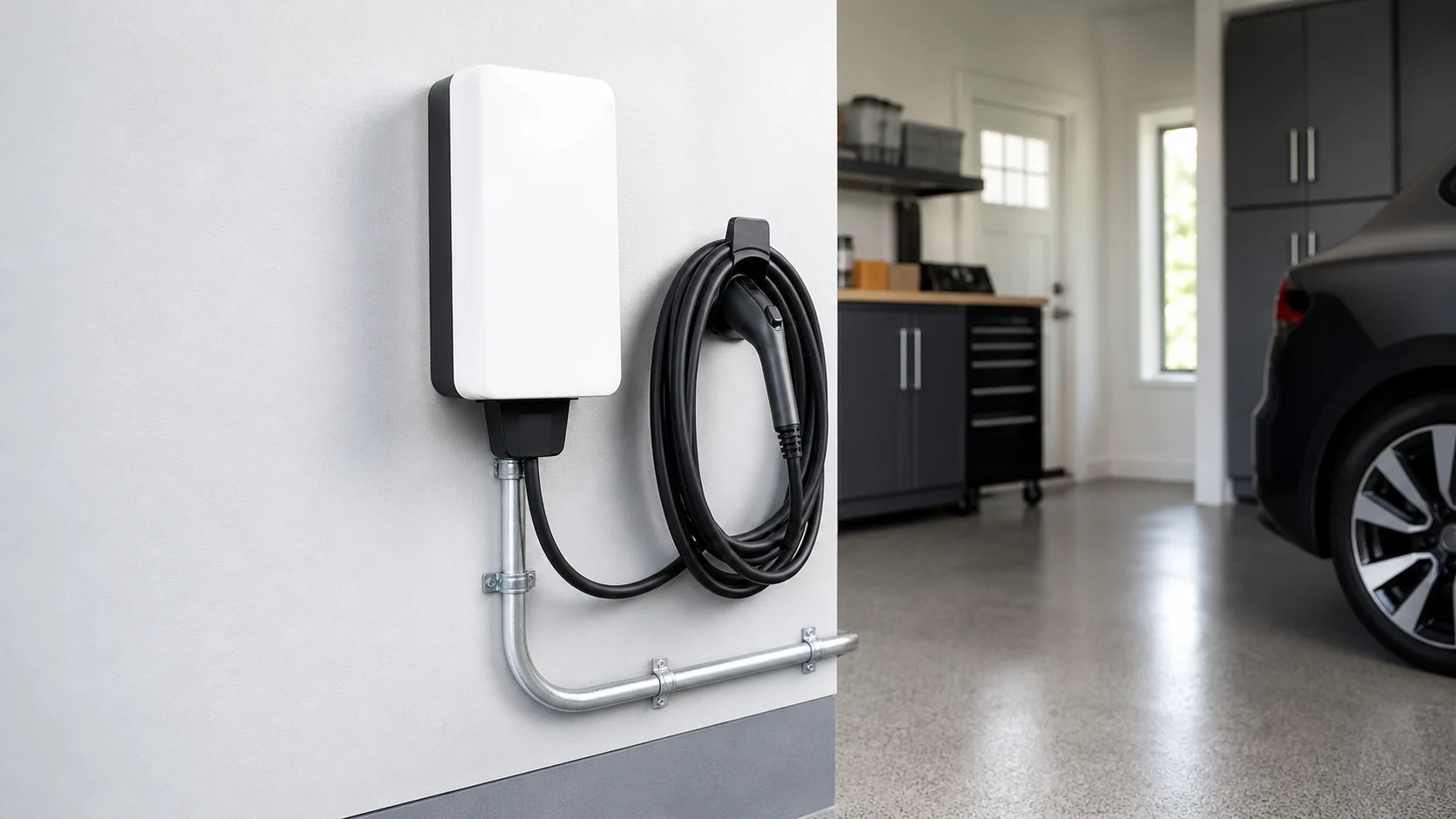
Dedicated EV Charging Circuits
A dedicated charging circuit supports the selected home charger arrangement. Charger placement and electrical-panel capacity evaluation help determine a practical installation plan for the parking area.
Request Circuit Installation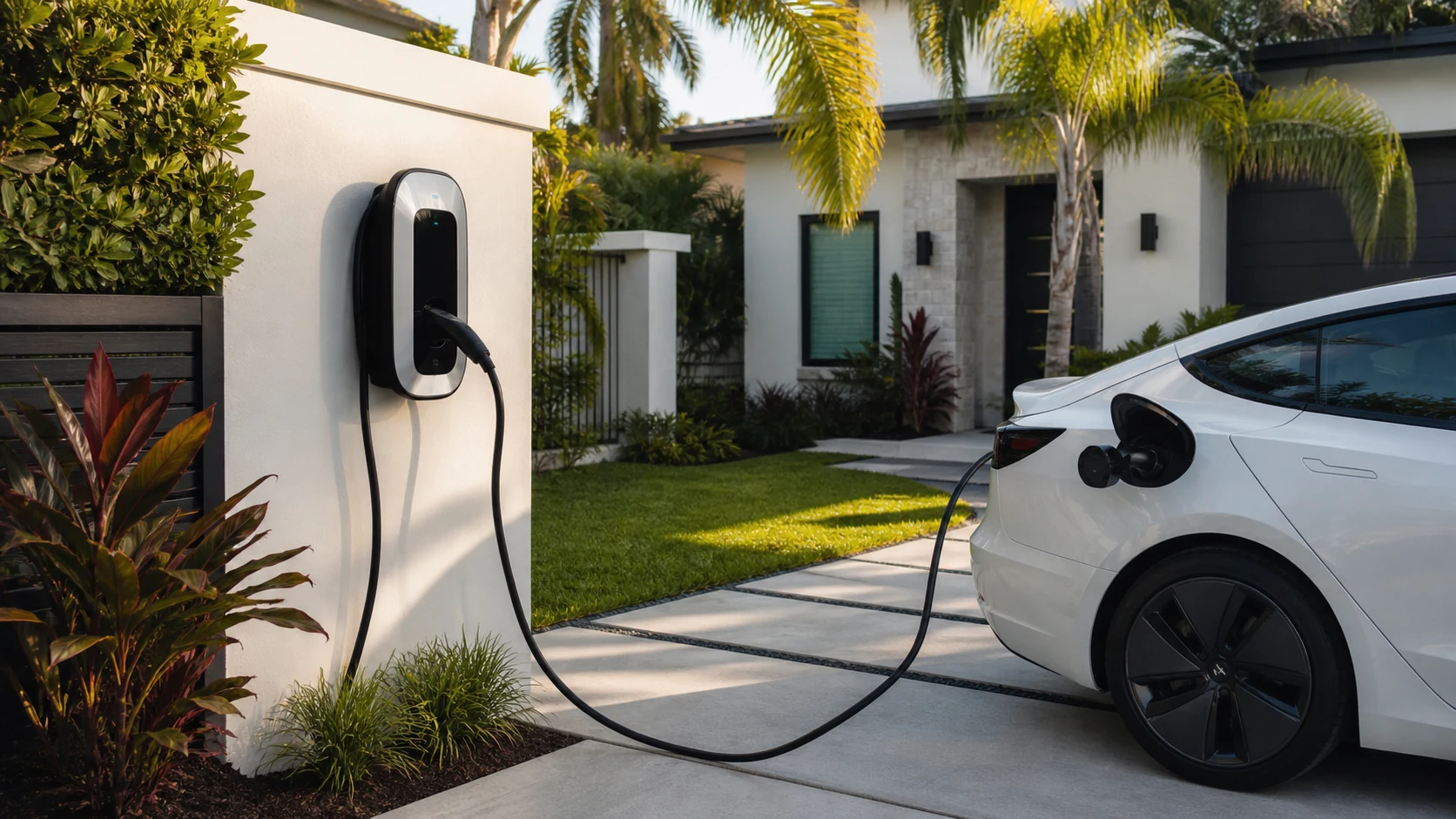
Tesla Wall Connector Installation
Tesla owners can request Tesla Wall Connector installation for a proposed home charging location. The vehicle, equipment, dedicated circuit and electrical-panel capacity should be considered together before installation.
Request Tesla Wall Connector InstallationCompare hardwired and plug-connected chargers before choosing equipment. If you are planning around available home capacity, schedule a panel-capacity evaluation.
Planning a new charger, a second EV or a different charging location?
Discuss the vehicle, preferred equipment and home electrical setup before installation.
What to Consider Before Choosing a Home EV Charger
A home charging decision includes more than the charger itself. The connector, hardwired or plug-connected arrangement, parking location, dedicated charging circuit and available electrical-panel capacity all affect the installation plan.
EV Charger Installation Miami helps homeowners in Miami and Miami-Dade County evaluate these practical details before moving forward with residential home EV charger installation.
Choose Equipment Around Your Vehicle
Start with the vehicle model year, charge port and selected charger. J1772 and SAE J3400/NACS equipment serve different connection needs, and any adapter should be checked for the exact vehicle and charger combination.
Plan the Charger Location
The proposed parking arrangement helps shape charger placement. A garage, carport or driveway location can affect where charging equipment and its dedicated circuit need to be considered.
Compare Hardwired and Plug-Connected Equipment
Hardwired equipment connects directly to a dedicated circuit, while plug-connected equipment uses a suitable 240-volt receptacle when supported by the charger instructions and electrical plan. The preferred connection method should fit the equipment and location.
Evaluate Electrical-Panel Capacity
A charger’s advertised maximum does not mean that the vehicle or home can use that output. Electrical-panel capacity evaluation helps connect the selected charger and proposed charging load with the home’s electrical setup.
Plan for Future EV Charging
Homeowners expecting another EV may value flexible connectors or compatible power-sharing features. Exact support depends on the selected equipment and the future vehicle, so it is useful to consider the household’s charging plans early.
Get Help Comparing Options
Miami homeowners can discuss charger placement, connector options and electrical-panel capacity before selecting equipment. For help comparing practical charging features before installation, Call Now.
Which Home EV Charger Option Fits Your Miami Property?
The right home EV charging arrangement depends on the vehicle, chosen equipment, electrical connection and proposed parking location. A practical plan also considers whether the home has capacity for the desired charging load and whether future EV charging is part of the household plan.
Miami-Dade County homeowners can request guidance before purchasing a charger or arranging residential home EV charger installation.
J1772 and J3400/NACS Connectors
The vehicle model year and charge port help determine which connector to consider. J1772 and SAE J3400/NACS describe important connection options, while supported adapters should be verified for the exact vehicle and charging equipment.
Hardwired or Plug-Connected Charging
Hardwired chargers connect directly to a dedicated charging circuit. Plug-connected chargers use a suitable 240-volt receptacle when the product instructions and electrical plan support that method, making the chosen equipment and location important parts of the decision.
Load Management and Home Capacity
Compatible load-management features can adjust charging demand around available home capacity when supported by the selected charger and electrical plan. An electrical-panel capacity evaluation helps assess how a preferred charging setup fits the home.
One EV or Two-EV Home Charging
A second household EV can change the charging plan. Flexible connector choices or compatible power-sharing features may be worth considering, but the selected equipment and future vehicle must support the intended arrangement.
Not sure which charger option fits your vehicle and parking area? EV Charger Installation Miami can help Miami-Dade County homeowners compare equipment, charger placement and electrical capacity before installation. Call Now.
Miami Home EV Charger Option Questions
Quick answers about J1772 and J3400/NACS connectors, hardwired and plug-connected charging, 240-volt receptacles, load management and electrical-panel capacity for Miami home charging.
Home EV charger options: The best equipment choice depends on the vehicle, charging connection, parking location and available electrical capacity. Discuss those details before purchasing equipment or beginning installation planning.
Ready to Compare Home EV Charger Options in Miami?
EV Charger Installation Miami helps homeowners compare J1772 and SAE J3400/NACS connections, hardwired and plug-connected equipment, dedicated charging circuits, charger placement and electrical-panel capacity before installation. Request service for your Miami or Miami-Dade County home.
Residential EV Charger Installation Near Miami-Dade County
View the Miami and Miami-Dade County, Florida service area and request residential EV charger installation.